What is Mission Assurance?
What is Mission Assurance, and what is its purpose?
What is Mission Assurance? Answering this question is both essential for the reader to benefit from the information in this blog and difficult to do without the reader having already been a practitioner for many years. One of many counterintuitive truths that demonstrates the rewards and challenges of working in the field of Mission Assurance.

Space … much more challenging than you even think. It is incredible the amount of engineering, materials science, thermal analysis, software, new technology, old technology, environmental assumptions, and so much more that go into space systems design
The term Mission Assurance can be interpreted in many ways, and its purpose is commonly misunderstood even at the highest levels of executive management, program management, and on down to the factory floor, where technicians and manufacturing engineers assemble and test a space system. There are many different “official” definitions of mission assurance, even when limiting those definitions specifically to aerospace. And from the many examples I have found, none in my opinion really do service to the field and are likewise elusive for the layman to understand.
For example, from the Aerospace Corporation Technical Operating Report TOR-2007(8546)-6018 Mission Assurance Guide, Mission Assurance is “The disciplined application of general systems engineering, quality, and management principles towards the goal of achieving mission success, and toward this goal, provides confidence in its achievement.”
I certainly appreciate the value of a brief explanation for a complex subject, but this definition doesn't really say what Mission Assurance is, what it fully comprises, or provide a full description of its purpose. “General systems engineering principles”; that’s pretty vague. “Achieving mission success”; what does that mean? Mission Success is certainly the end goal of mission assurance, but what is “Mission Success”, and who gets to decide? Paraphrased from the same document:
“Mission success is the achievement by a system, or system of systems, to singularly or in combination meet not only performance requirements but also the expectations of the users and operators. The safety of a system, its operability, suitability, and supportability are evaluated after operational turnover and according to specified delivery timelines and performance criteria.”
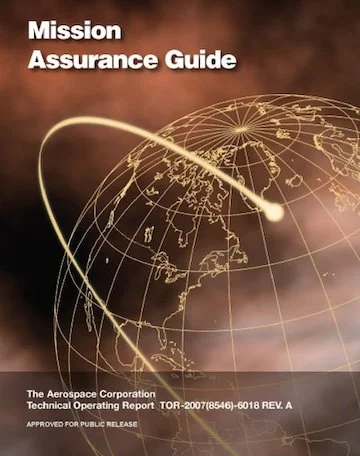
Aerospace Corporation TOR-2007(8546)-6018 Mission Assurance Guide. This document has been revised many times, but I still frequently reference Rev A as it is well written for beginners.
A more descriptive definition than that of mission assurance, and yet there is still some ambiguity. A system design must meet its intended performance goals and the “expectations” of the end user? Are these expectations written, unwritten, or even understood by the contractor? Is program cost, schedule, or the opportunity for future business a part of these expectations? And is mission success or failure not decided until after a system is turned over to the end user? There are a lot of organizations between most contractors and the end users. And final turnover seems very late in the game to make this determination, certainly too late to make many changes. Is there an outcome between total success and total failure that might be acceptable to all parties? How Mission Success is characterized and under what criteria it is evaluated seems just as important as the design and performance of the delivered system.
Mission Assurance is such a complex field, and Mission Success such a nebulous goal, that I find it better to explain what they are, rather than supply straight definitions. It is critical to explain both Mission Assurance and Mission Success together because, as shall be seen through the course of future blog posts, the interrelation of these two subjects is almost as if they are the same thing. Which, in my opinion, they are; more to come on this later.
When I first started in the field of Mission Assurance Management, I spent a lot of time studying documents from NASA, Aerospace Corporation, Space Systems Command, Missile Defense Agency, and my own company’s handbook and command media, attempting to come up to speed quickly with what Mission Assurance was and how to execute it on a program. However, it’s not that simple. And trust me, many of the documents seem like they were written by committees that were trapped in a beige conference room 14 hours a day for months at a time – a fate worse than launch failure.
Unfortunately, it may take a long time working in the field and supporting space missions before one comes to an understanding of what the practice of Mission Assurance is, fully appreciates its purpose, and knows how to perform many of the associated activities. As a learning exercise, and a means of judging a practitioner’s experience level, I encourage all Mission Assurance Managers and Subject Matter Experts to come up with their own definition for Mission Assurance that encompasses what it means to them individually and captures the essence of what it is they personally do, to ensure Mission Success. You would be surprised at how varied the answers are.
Here is what I have come up with for myself.
“Mission Assuranceis a full lifecycle engineering and leadership process that identifies, quantifies, and manages risks to mission success, ensuring products, systems, and operations perform as intended, for their full intended life, within the environments and constraints for which they were designed. “
Still kind of a mouthful, right? But trust me, there is a lot of thought and meaning packed into that definition, and in my forthcoming book, The Tao of Mission Assurance, I provide a full explanation of the thinking and purpose behind each word.
Mission Assurance, Fundamentally, is About Risk Management
Mission Assurance is the act of managing the quantity, robustness, and timeliness of risk mitigating activities in order to maximize the opportunity for mission success. Mission Success is the safe, efficient, and timely development of a resilient space system capability that directly fulfills an end user's critical need. And depending on the nature and risk posture of the program, your organization’s purpose and culture, and your own personal values, delivering that capability on time and on budget is part of the success criteria.
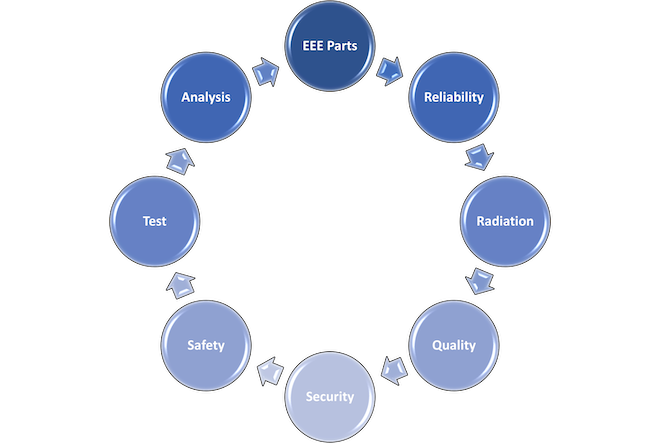
Mission Assurance requires the managed application of many engineering disciplines, including quality, security, reliability, EEE Parts, radiation effects, and so much more!
Risk Management, as paraphrased from NASA’s Risk Management Handbook (Version 2.0 Part 1, NASA/SP-20240014019), is “The coordinated flow of activities, included and closely integrated with all other management activities, to identify, evaluate, and address risk with appropriate actions.”
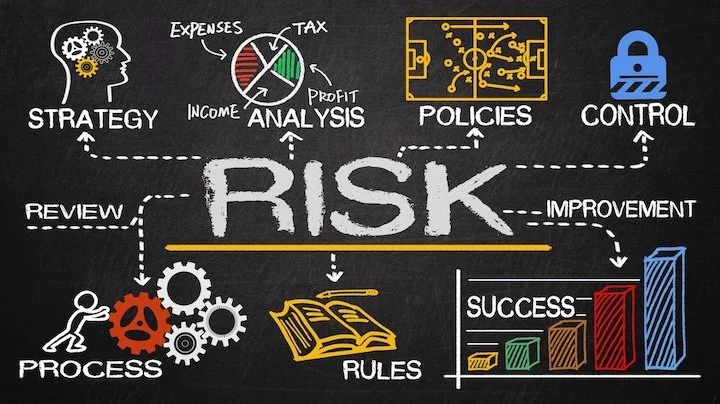
Risk Management is an amalgamation of many interrelated activities, is central to Mission Assurance, and critical to the success of Space Systems development
Doesn’t that sound a lot like my definition for Mission Assurance? But to be clear, Mission Assurance is more focused on the performance of risk-mitigating actions, rather than only monitoring and evaluating risks. We will talk much more about Risk and Risk Management in future blog posts, but it should be emphasized that the formal practice of risk management at the project, program, and mission level, as governed by standards such as ISO 17666:2016 (Space Systems - Risk Management) which defines the core principles, requirements, and terminology for managing risks in space projects, is a central aspect of Mission Assurance and a key role and expectation of the Mission Assurance Manager.
“What is a Mission Assurance Manager?”
Don’t worry, we will talk about the Mission Assurance Manager and their role in the program’s overall risk management strategy in the very next Blog post.
AI-assisted synopsis of Chapter 3 of The Tao of Mission Assurance