When most people hear the words Mission Assurance, they probably don’t think of ancient Chinese philosophy.
They think of requirements. Reviews. Risk matrices. Quality inspections. Reliability predictions. Parts control. Failure analysis. Test programs. Safety assessments. Maybe a very serious person sitting in the back of a design review asking uncomfortable questions.
And all of those things are part of Mission Assurance.
But they are not the whole of it.
Mission Assurance, Quality, and Risk Management are technical disciplines. They depend on data, engineering analysis, documented processes, verification, and evidence. But they are also philosophies; ways of thinking about uncertainty, complexity, human behavior, and the decisions we make when success is important but never guaranteed.
This distinction matters because you can perform every required assurance activity and still fail.
You can conduct the review, close the action items, disposition the nonconformances, calculate the reliability number, populate the risk register, and check every box on the checklist, and still completely miss what the system is trying to tell you.
The technical machinery of assurance is necessary. But the machinery needs a philosophy behind it to be effective.
That is where the Tao comes in.
What Does “Tao” Have to Do with Aerospace?
The word Tao is commonly translated as “the Way.” At its simplest, it describes acting in harmony with the nature of things rather than continually trying to force reality into the shape we would prefer.
That does not mean passivity. It does not mean mysticism. And it certainly does not mean replacing engineering judgment with ancient aphorisms.
It means understanding the system well enough to work within it.
That idea appears throughout Taoist thought and literature: balance, simplicity, flexibility, awareness, humility, and restraint. The underlying principle is that complex systems cannot always be controlled by simply applying more force. Sometimes excessive control creates the very instability we are trying to prevent.
That idea should sound surprisingly familiar to engineers.
Systems engineering, control theory, Quality, and Mission Assurance all deal with interconnected systems in which actions have consequences, sometimes second- and third-order consequences that are difficult to predict. Effective leadership therefore depends not merely on imposing requirements, but on understanding relationships, feedback, constraints, and tradeoffs.
This is one reason I have always found the Tao such a compelling metaphor for Mission Assurance.
My own introduction to these ideas did not begin in aerospace. It began much earlier, practicing martial arts. On the dojo floor, you learn that strength without timing is often wasted. Force applied in the wrong direction accomplishes very little. Balance, awareness, timing, and economy of movement can matter more than brute strength.
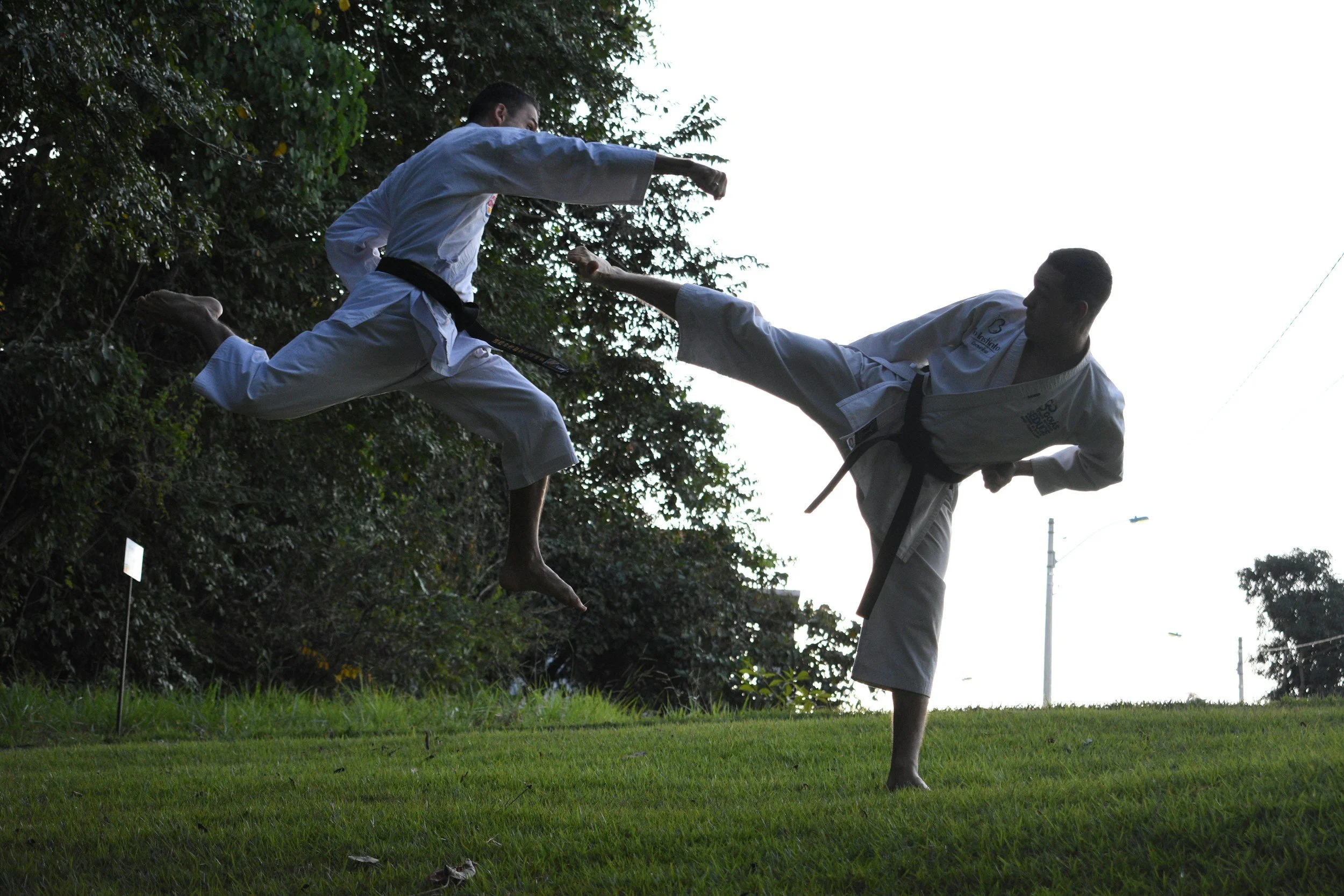
Only much later did I recognize how much that way of thinking had influenced the way I approached engineering and leadership.
A space system development program isn't a martial arts match, of course. But the lesson carries over surprisingly well:
Understand before acting. Apply force where it matters. Don't confuse activity with effectiveness.
That is mission assurance-like thinking.
Assurance Is a Technical Discipline
None of this diminishes the importance of technical rigor. Quite the opposite.
Mission Assurance exists because aerospace systems are extraordinarily unforgiving. A modern space mission brings together hardware, software, electronics, structures, mechanisms, thermal systems, radiation environments, suppliers, manufacturing processes, operators, facilities, launch systems, and human organizations. Each one of these disciplines exists to characterize and mitigate special types of risk.
Mission Assurance therefore integrates disciplines such as Quality Assurance, Reliability, Systems Safety, Software Assurance, EEE Parts, Radiation Assurance, Supply Chain Assurance, and Risk Management to establish confidence that the mission will perform as intended.
The objective is not perfection. It is assurance proportionate to the mission objectives and consequences of failure. That requires an integrated approach to technical risk, quality, safety, reliability, and specialty engineering rather than treating each as an independent compliance function.
Quality itself illustrates this dual nature beautifully.
Like Mission Assurance, Quality is unquestionably technical. We establish requirements. We control processes. We inspect products. We measure variation. We investigate nonconformances. We determine root causes and implement corrective actions.
But Quality is also a philosophy. At its deepest level, Quality asks a very simple question:
How do we create an organization that reliably produces what we intended to produce?
That is no longer merely a question about what soldering standard one follows, or how many inspections can be considered “enough”.
It is a question about process design, organizational behavior, learning, accountability, communication, leadership, incentives, and culture.
Risk Management has the same dual identity.
Risk Management has its technical machinery: likelihood, consequence, uncertainty, risk matrices, probabilistic analysis, mitigation plans, risk acceptance, reserves, models, and decision criteria.
But underneath all of that lies a philosophy:
How do we make decisions when we do not know exactly what is going to happen?
That is a profound question.
And the practice of Mission Assurance sits at the intersection of all three.

The ability to achieve balance means that there is no one-size-fits-all solution.
Balance Is Not Compromise
One of the most useful Taoist concepts for Mission Assurance is balance.
Balance is sometimes mistaken for splitting the difference. It isn't.
Every engineering decision redistributes risk.
Add redundancy, and reliability may improve; but mass, power, complexity, software burden, and cost may increase. Add another test, and technical confidence may increase; but schedule risk may increase. Tighten process controls, and manufacturing consistency may improve; but responsiveness and innovation may suffer.
There is rarely a single axis called “more assurance.”
Instead, we are continually exchanging one kind of risk for another.
The job of Mission Assurance is therefore not to eliminate risk. It is to understand it well enough to help the program choose wisely.
Too much rigor can choke agility. Too little rigor allows failures to propagate. The objective is not maximum assurance activity; it is the right assurance for the mission.
This becomes particularly important in today's aerospace environment, where programs are under intense pressure to move faster and spend less.
The wrong response from assurance is simply to say, “No.”
The equally wrong response is to abandon discipline in the name of speed.
The harder, and much more valuable, answer is:
What do we actually need to know to make this decision with acceptable confidence?
That question changes the conversation.
Now Quality is no longer the police, Risk Management is no longer the keeper of the red-yellow-green chart, and Mission Assurance is no longer the organization that slows the program down.
They become decision disciplines.
Wu Wei: Knowing When to Intervene
Another Taoist idea that translates surprisingly well to assurance is wu wei, sometimes translated as “non-action” or “effortless action.” Taken literally, that sounds like terrible advice for a Mission Assurance Manager.
“There's a problem.”
“Excellent. I shall do nothing.”
That is not what it means.
Wu wei is better understood as appropriate action, not forcing a system unnecessarily when a smaller, better-timed intervention will accomplish more.
In leadership, that can mean establishing clear objectives and boundaries while allowing capable people the freedom to determine how best to achieve them. The earlier blog draft connects this idea to management by exception, employee ownership, and avoiding unnecessary top-down control.
In Mission Assurance, the principle becomes even more interesting.
· Not every deviation requires escalation.
· Not every risk requires mitigation.
· Not every nonconformance requires a massive corrective-action campaign.
· Not every engineering disagreement requires the MAM to decide who is right.
The skilled assurance leader learns to distinguish noise from signal. Sometimes the best intervention is a technical analysis or an independent test. But sometimes it can consist of one well-timed question.
Imagine a flight review six months before launch. The engineering team proposes eliminating an environmental test to protect schedule because existing data looks good. The Mission Assurance Manager could simply quote the requirement, storm about quality and best practices, and stick with doing “what we’ve always done”.
Or they could ask:
What assumption gives us the confidence that this test is unnecessary?
Now the discussion changes.
Perhaps the answer confirms that the test is essential. Perhaps the evidence supports eliminating it. Perhaps the team develops a reduced test campaign that preserves both technical confidence and schedule.
The purpose of assurance was never to perform the test.
The purpose was to understand the risk.
The Goal and the Way
This, ultimately, is what I mean by the Tao of Mission Assurance.
It is not an attempt to turn engineering into Eastern philosophy.
It is recognition that the best assurance professionals operate on two levels simultaneously.
They understand the technical disciplines: Quality, reliability, safety, risk, software, parts, radiation, testing, verification, process control, failure analysis, and the standards and methods that support them.
But they also understand the philosophy behind those disciplines.
They understand that uncertainty cannot be eliminated, that every decision changes risk, that technical systems and human systems are intertwined, that rigor without judgment becomes bureaucracy, and that flexibility without discipline becomes recklessness.
Mission Assurance is about understanding the system well enough to know what matters most, being disciplined enough to gather the evidence, being humble enough to question what we think we know, and being courageous enough to act when action is necessary.
That is Quality.
That is Risk Management.
That is Mission Assurance.
And that is Tao - the Way.
Yin and Yang: no achievement without work, no reward without risk.
AI-assisted synopsis from Chapter 2 of The Tao of Mission Assurance
